
China is all set to send on Thursday the first three crew members to its under-construction space station which is expected to be Beijing's eye in the sky and will rival the ageing International Space Station (ISS).

As India celebrated its success in testing an unmanned space crew module on Thursday, over 1.7 lakh Indians had another reason to be happy as a similar National Aeronautics and Space Administration spacecraft carrying a microchip containing their names was brought back safely to the Kennedy Space Center in Florida, United States, on the same day after a space odyssey.

Here's your weekly digest of the most weird, true and funny news from the across the world.
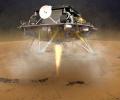
The rover, Zhurong, named after a god of fire and war in Chinese mythology, landed at the pre-selected area in Utopia Planitia on Mars, the state-run Xinhua news agency reported.

China's President Xi Jinping congratulated scientists on the complete success of the Chang'e-5 mission.

'I can assure you the Ganga will be more polluted in 2030 than it is now.' 'What they are trying to do now is clean the Ganga without understanding how to do so.'

'India appears to have stood its ground on strategic autonomy by resisting US pressure on Russia, China and Iran, but succumbed to the temptation to walk into a tighter embrace in defence cooperation, a high priority of the Trump administration,' notes Ambassador T P Sreenivasan.
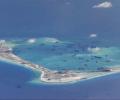
China will prioritise the development of a floating nuclear power platform in the coming five years.

T N Seshan believed that toughness at every level is needed to keep the flock under him strictly duty bound, recalls Dr K S Parthasarathy, former secretary, Atomic Energy Regulatory Board.

It has been a half-century since Neil Armstrong stepped out of a lunar module and onto the surface of the moon on July 20, 1969 and declared, "That's one small step for [a] man, one giant leap for mankind." The moment heralded a golden age of space exploration that was set in motion just eight years earlier in 1961, when United States President John F Kennedy promised before Congress to put a man on the moon before the decade was out. Here are some lesser-known facts about the historic first mission:

With Donald Trump the appeal has to be to his business instincts in which his personal interests seem to play a significant role, says former foreign secretary Kanwal Sibal.

The 58-year-old businessman, who is also the son-in-law of former Karnataka Chief Minister SM Krishna, has been missing since Monday evening from Mangaluru.

'It was almost as though there was widespread relief that the defence bureaucracy, and the minister, could find someone willing to shoulder the blame for everything that had gone wrong with the services under Antony's charge -- the poor preparedness of the forces, slow acquisitions caused by indecision, cancellation of contracts and whimsical blacklisting of defence contractors over the tiniest suspicion that they may have paid speed money or kickbacks.'

'It is in the interest of both sides that the visit of the US President is seen as being successful. Both sides have invested considerable political capital in it. This rapid exchange of visits and the decisions taken have to be justified, beyond the symbolism, which is no doubt important in itself. This opportunity to impart a fresh momentum to ties should not be missed,' says former foreign secretary Kanwal Sibal.

This is the joint statement issued by the ministry of external affairs on the visit of US President Barack Obama to India.
